Nov
17
2008
Ken Nelson has taught many the art of the Daguerreotype and at the recent symposium in DC he was on the scene again with beautiful plates in hand. In his own words:
I first read the word “daguerreotype” in an article by James Ambrecht in the June, 1973 issue of Camera 35 magazine. Following on that, I’ve been making daguerreotypes since 1976. I’m largely self-taught, but owe a great debt to Irving Pobboravsky for the advancement of my skill. I taught the Daguerreotype as part of the Historic Process Workshops at the International Museum of Photography at George Eastman House between 1994 and 1999. Lately, I owe a debt for the advancement of my skill to a particular student of mine, Mike Robinson of Toronto, Canada. My students are often now my teachers.
After a nine-year hiatus since 1999, I have returned to the Daguerreotype with a renewed love. The process is being kind to me, allowing me to pick up better than where I left off. In the mean time my vision has evolved and we’ll see where that takes me, but I still see the exquisite Daguerreotype as my preferred way.


Nov
14
2008
Now in the galleries section of this site: Alyssa Salomon. Having studied under Bob Shlaer she has been award a Virginia Museum of Fine Arts Professional Fellowship, from her website:
“Technically, I employ a broad array of nineteenth century photographic methods in homage to that age of primary scientific discovery and system building. I rely on the unfamiliar views afforded by these arcane technologies to attract the eye and to engage recollection.”


Nov
14
2008
Opening this weekend in Chicago is an exhibition featuring a work by Daguerreotypist Sean Culver.
On until December 20th the exhibit at the Around the Coyote Gallery has a kinetic sculpture with Daguerreotypes. More of Sean’s work can now be seen in galleries section of this site.


_______________________
Around the Coyote Gallery
1935 1/2 W. North Avenue
Chicago, IL 60622
773 342 6777
www.aroundthecoyote.org
OPENING RECEPTION:
Saturday, November 15, from 6pm-10pm
see also
www.seanculver.com
Nov
09
2008
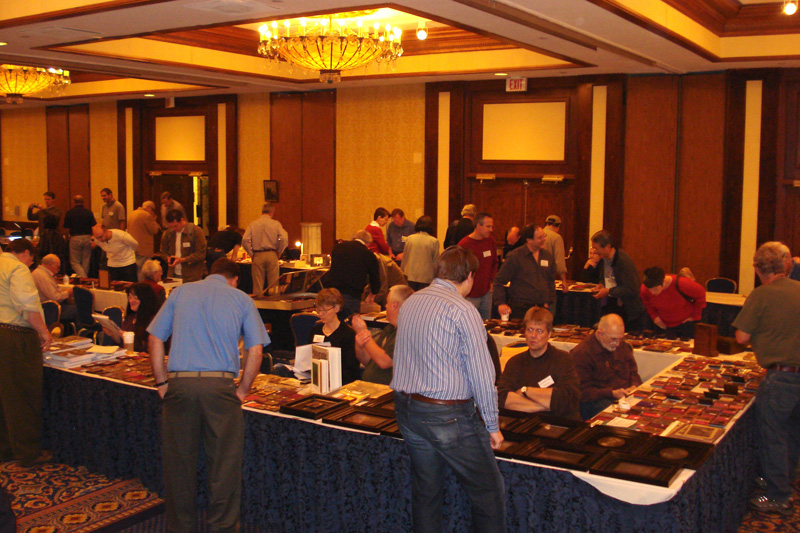
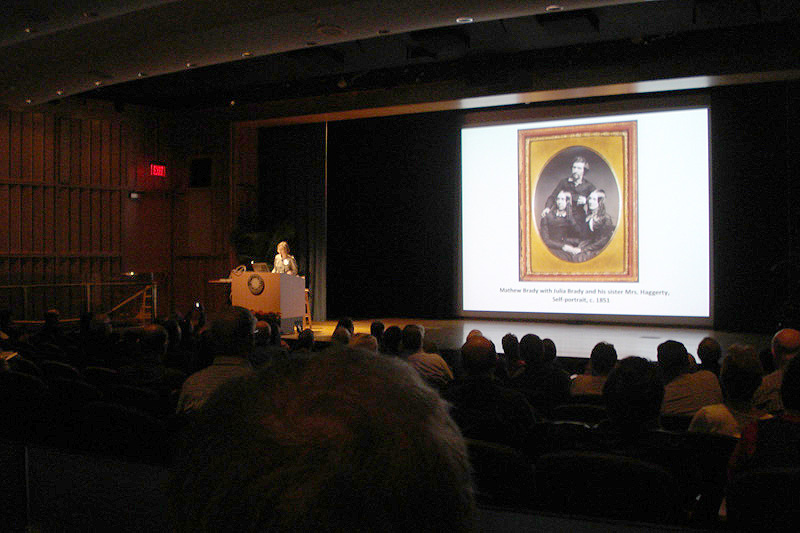
A convergence of contemporary Daguerreotypists, veteran and newcomer, occurred this last week in Washington D.C.. Held at the Smithsonian National Portrait Gallery which displayed a collection gifted by Larry West, the Daguerreian Society Symposium hosted a trade fair of Vintage and contemporary Daguerreotypes and a day of presentations by Photo historians. If those that attended have more images to add, please email them in, as it will be of interest to those who could not attend.
Aug
21
2008
We all know one of the most difficult things about making daguerreotypes, especially for beginners, is the lack of equipment. As such, Alan and I thought it important to have a place to buy, sell, and trade daguerreian equipment and supplies. I am proud to announce the Daguerreian Marketplace as the fourth section of the forum. It is only viewable by members of the forum so log in or sign up.
Enjoy!
Jon Lewis
Aug
08
2008
photolytic wrote:Emoticons not withstanding, your comment that "Sometimes I’ll lay down a heavy iodine coating if I know I’ll need a (comparatively) fast exposure" may apply only to Becquerel developed plates. With mercury developed plates a thinner iodide coating with optimum bromide is generally faster and produces a higher contrast image but unfortunately also more solarization
Good to know!
Aug
07
2008
jdanforth wrote:
photolytic wrote:Daguerreotype plates thus polished react more rapidly to iodine fumes producing a thicker coating. It may be necessary to reduce the fuming time in order to bring the contrast back up to the desired level.
This is very true. The sensitivity increases as well but you do lose contrast. Double-edged sword, really. Sometimes I’ll lay down a heavy Iodine layer if I know that I’ll need a (comparatively) fast exposure. 
Emoticons not withstanding, your comment that "Sometimes I’ll lay down a heavy iodine coating if I know I’ll need a (comparatively) fast exposure" may apply only to Becquerel developed plates. With mercury developed plates a thinner iodide coating with optimum bromide is generally faster and produces a higher contrast image but unfortunately also more solarization
Jul
25
2008
photolytic wrote:Daguerreotype plates thus polished react more rapidly to iodine fumes producing a thicker coating. It may be necessary to reduce the fuming time in order to bring the contrast back up to the desired level.
This is very true. The sensitivity increases as well but you do lose contrast. Double-edged sword, really. Sometimes I’ll lay down a heavy Iodine layer if I know that I’ll need a (comparatively) fast exposure.
Jul
24
2008
I agree that a haze can be produced when the polisher is run too fast and the plate heats up. You should buy an orbital polisher with variable speed adjustment, such as the Bosch model 3725DEVS. This model is available at toolsforless.com for less than $120. www.toolsforless.com…Polisher. The polisher should be set it at the lowest possible opperating speed.When polishing dry with powdered rouge you may get some haze after prolonged polishing. This haze will be removed when the plate is subsequently polished with lampblack.Daguerreotype plates thus polished react more rapidly to iodine fumes producing a thicker coating. It may be necessary to reduce the fuming time in order to bring the contrast back up to the desired level. You may also find that RO polished plates are up to twice as sensitive to light.Try reducing the exposure time to prevent haze from forming in the shadow areas of the image.





 Agárdi, Attila
 Albornoz, Carlos Darío
 Arai, Takashi
 Bailun
 Ballujera, Imanol Gordo
 Barceló, Gabriel
 Bekhuis, Alan
 Bertolo, Rossano
 Carrillo, Daniel
 Choulle, Simone
 Colorado, Oscar
 Costa, Francisco Moreira
 Culver, Sean
 Cynan, Richard
 Etter, Josie
 Gazit, Dafna
 Genty, Dominique
 Hultman, Åke
 Jeong, HaengSook
 Junyi, Li
 Kessell, Mark
 Klups, Jaroslaw
 Ortelee, Marinus
 Penkauskas, Andrius
 Porkkala, Jalo
 Robinson, Mike
 Sabogal, B. Camilo