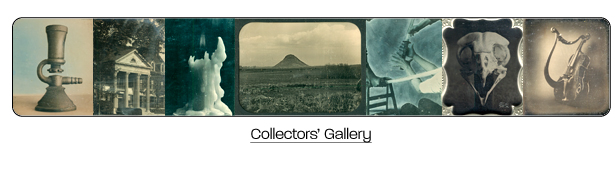
This gallery in our contemporary daguerreotypes section of the galleries page, showcases images from private collections. With this we hope to widen the scope of modern daguerreotypy to be seen on the site and give purveyors of the genre a opportunity to contribute. Ownership of the plates is anonymous in the gallery, only the artist is attributed. If you own modern daguerreotypes you can submit them to the colectors’ gallery by emailing images to admin@cdags.org
Long a figure in the modern daguerreian landscape Harvey Zucker has done much for the genre. As president of the New York Photo Historical society in its early days and in operating what was for many years the only solely photographic bookshop in NYC, Harvey shone light on daguerreotypes old and new. His own daguerreian images from the 1970’s now grace our galleries.
Expanding Jerry’s gallery page is a selection of his stunning portraiture. Unmistakably the work of Jerry and with a few art world celebrities in it as well..
Keeping our galleries international are the becquerel images of Rossano Bertolo from Gorizia, Italy. Rossano is definately of the new generation of practitioners, making his first image just over two months ago. Like many of us he received advice and inspiration from a more experienced daguerreotypist, in Rossano’s case it was Giancarlo De Noia.
An interesting news story gleaned from the internet within hours of being published lead us to tracking down our latest artist Gallery. Tyler Suppha-Atthasitt is a lab tech and an adjunct professor of photography at Weber State University in Utah. New to the process and working out the exposure by theory he accomplished a self portrait that most would have given up on, but with true Daguerreian perseverance he succeeded. When he told me of the exposure I wrote back saying you meant 24 seconds right?:
“I indeed meant 24 minutes. It was shot with a 150mm only a few feet away. I was using sunlight through a sliding glass door and lying on the ground as to minimize head movement. I have generally been determining my exposures around a base time of 45 sec @ f/5.6 to get an EV of 14 to reproduce as a mid tone. From there, I count stops, zone technique, to figure compensating exposures. This was the only way I could make sense of it. In the end it wasn’t composed how I would prefer, but it’s tough to figure it out when working the camera yourself. 24 minutes, it was quite meditative”
Expanding our equipment galleries are the fuming boxes from Marc Fish of London in the UK. Offering a discount and choice of woods for bulk orders he also has some current examples ready for sale now.
In the heyday of the 1970’s daguerreotype revival a gathering of contemporary daguerreotypists occurred on Staten Island, New York. Its aim was to share experiences of coming to terms with the process, to further the state of the art. A written account of the meeting provides insight into the trials of being a modern daguerroetypist and so we have added this to a new section – “General Writing” on the resources page.
Comments Off on Convocation of Latter Day Daguerreans (1976)
Adding to the modern articles on the process in the resources section is an exposure guide for plates sensitized with iodine and bromine and developed with mercury. Submitted by Irving Pobboravsky, who notes that because every worker’s situation is different it should only be considered as a starting point, but it is just the sort of resource we seek to gather for the readers of this site, many thanks to Irv.
Link to pdf file : exposure guide
Additional notes from Irv:
EI = Exposure Index
EV = Exposure Value –( incident meter)
the table at the top is for an exposure index (ISO) of 0.05; the one at the bottom is for ISO 0.10.


 Agárdi, Attila
 Albornoz, Carlos Darío
 Arai, Takashi
 Bailun
 Ballujera, Imanol Gordo
 Barceló, Gabriel
 Bekhuis, Alan
 Bertolo, Rossano
 Carrillo, Daniel
 Choulle, Simone
 Colorado, Oscar
 Costa, Francisco Moreira
 Culver, Sean
 Cynan, Richard
 Etter, Josie
 Gazit, Dafna
 Genty, Dominique
 Hultman, Åke
 Jeong, HaengSook
 Junyi, Li
 Kessell, Mark
 Klups, Jaroslaw
 Ortelee, Marinus
 Penkauskas, Andrius
 Porkkala, Jalo
 Robinson, Mike
 Sabogal, B. Camilo